Understanding Hidato Logic Puzzles: A Balanced Look at This Sequential Path Game
A hidato logic puzzle offers something distinct in the crowded world of brain teasers. It is not about crunching numbers or spotting word patterns. Instead, it asks you to reconstruct a hidden numerical path, cell by cell, until the grid tells a flowing, unbroken story from 1 to the highest number. For adults researching new mental challenges, the appeal often lies in its elegant blend of spatial reasoning, gentle deduction, and a soothing, almost meditative solving rhythm. This type of puzzle sits somewhere between a number sequence challenge and a connective maze, and understanding where it fits among other logic games can help you decide whether it belongs on your desk, tablet, or puzzle shelf.
What Exactly Is a Hidato Puzzle?
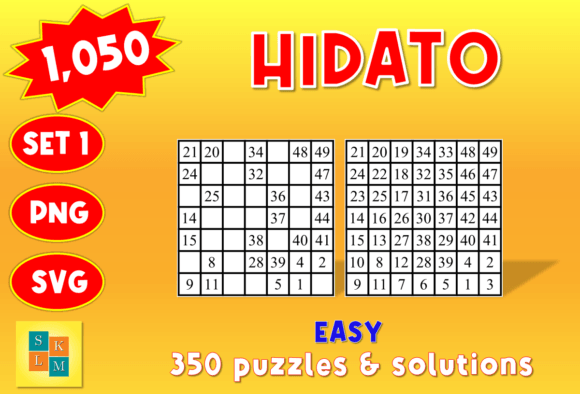
At its core, a hidato logic puzzle presents a square grid filled with a scattering of pre-placed numbers. The goal is to fill every empty cell so that the numbers create a single continuous chain, moving step by step from 1 to the total count—often 81 in a 9×9 grid. You may connect cells horizontally, vertically, or diagonally. Unlike a simple connect-the-dots exercise, the sequence must remain unbroken and never branch. Every move counts. If you get stuck, the path breaks, and you must retrace your reasoning.
This puzzle type draws from the family of number path puzzles, sometimes referred to as Number Hidato or Hidoku. The rules are minimal, but the emergent complexity can be surprising. A well-designed hidato puzzle feels like a quiet detective story: a few given clues lead you to deduce the only possible path forward, cell by logical cell. There is no arithmetic, no memory of obscure facts—just the pure satisfaction of watching order emerge from apparent chaos.
Comparing Hidato to Better-Known Logic Puzzles
If you already enjoy puzzles, you probably know Sudoku, Kakuro, or perhaps crossnumber challenges. Comparing hidato to these staples reveals some important tradeoffs. In Sudoku, you juggle multiple constraints across rows, columns, and regions. The grid is a web of simultaneous restrictions. Hidato, by contrast, has one overarching constraint: the unbroken number path. It is a sequential constraint puzzle. This makes the solving experience feel less like managing a complex ledger and more like following a trail through the woods.
Where Sudoku often rewards scanning and pattern elimination, hidato rewards spatial forethought and connectivity analysis. You might ask: “If 23 is here and 25 is over there, where must 24 hide?” The answer depends on adjacency, not exclusion lists. For visual thinkers, this can feel more intuitive. For those who thrive on the crisp logic of unique digit sets, hidato might initially seem too loose. Yet its constraints tighten rapidly as the path fills in.
Word-based puzzles like crosswords or word searches draw on vocabulary and language recognition. Hidato remains purely visual-numeric, but numbers are only labels for position—no calculation required. That sets it apart from math-heavy puzzles like KenKen or Calcudoku. In fact, you could replace numbers with letters or symbols; the underpinning is a path-finding logic that is fundamentally non-verbal and non-arithmetic.
Maze puzzles present a similar sense of progress, but a maze generally asks you to find one path from start to finish among many dead ends. Hidato flips the idea: you build the path, and the grid itself becomes both maze and solution sheet.
The Cognitive Payoff: Benefits Beyond the Grid
Like any well-constructed logic puzzle, hidato offers a range of mental benefits, but the emphasis shifts depending on what your brain requires. Because you must constantly evaluate which cells can connect to which, the game strengthens sequential reasoning and spatial working memory. You are mentally rehearsing possible number placements, checking adjacency, and updating a mental model of the evolving path. This low-stakes, focused attention can be a form of cognitive rest for people who spend hours processing fragmented information at work.
Many solvers report that hidato feels less stressful than time-pressured puzzle games. The lack of complex rules means it quickly becomes portable—you can pick up an easy 9×9 grid during a coffee break and finish it without needing reference notes. This makes it a practical mindfulness tool as much as a brain teaser. The gentle, incremental progress can lower anxiety, similar to coloring or pattern-matching activities, while still offering genuine deductive challenge.
Another benefit lies in pattern recognition. Over time, solvers begin to spot forced sequences: a cell surrounded by filled numbers that leaves only one possible neighbor for the next link. This trains a kind of intuitive logic that blends probability and certainty. It is not about guessing but about seeing structural inevitability—a skill that transfers well to troubleshooting, planning, and even debugging in professional settings.
Navigating Difficulty Levels and Puzzle Design
A strong puzzle collection usually differentiates difficulty not by adding new rules, but by tweaking the density and placement of clues. Easy hidato puzzles in a 9×9 grid might provide a generous sprinkling of numbers, leaving you to fill only the gaps with obvious neighbors. Medium puzzles raise the stakes by offering fewer anchors, so solvers must rely more on mid-path deduction. Hard puzzles may scatter so few clues that the initial path seems to have multiple plausible directions, forcing you to hold alternatives in mind and test possibilities carefully.
For instance, a well-curated set of 350 easy, 350 medium, and 350 hard puzzles—often bundled with solutions and printable file formats like SVG and PNG—gives users a long ramp to build skill without running into sudden difficulty cliffs. Beginners can enjoy quick wins, while experienced solvers can slow down and savor the harder constructions. When evaluating such a collection, it is helpful to check whether the difficulty curve feels natural. Does an easy puzzle still teach you new adjacency patterns, or does it become mechanical? A quality hidato hard puzzle should never require outright guessing; a single logical thread should lead home, even if it is thin and winding.
A practical detail: some collections include separate solution files and notes on how to play. This matters if you plan to create puzzle books, classroom materials, or digital content. Having clear SVG or PNG graphics allows you to resize grids without loss, embed them in documents, or even build your own puzzle apps. The included “zipped fill” format (all puzzles plus solutions in a single folder) can be a productivity boon for hobbyist publishers or teachers who need a ready-made bank of clean, high-quality puzzles.
When Hidato Might Not Be Your Best Option
Despite its appeal, hidato is not a universal puzzle solution. If you crave numerical operations—addition, multiplication, or equation building—a puzzle like Kakuro or Cross Sums will scratch that itch more directly. Hidato’s numbers are placeholders, not operands. For some, this can feel like a missed opportunity; they want the satisfaction of calculating. Similarly, if you enjoy the rich taxonomy of advanced Sudoku techniques (X-wing, swordfish, coloring), you may find hidato’s path logic too narrow in scope. The solving vocabulary is smaller, and after many puzzles, the path of deduction can start to feel repetitive.
Complexity-hungry solvers might also perceive a ceiling. Once you master the handful of adjacency patterns and forced-placement heuristics, even hard hidato puzzles rarely introduce new logical dimensions—unlike, say, Nurikabe or Slitherlink, which blend global and local constraints in ever-deeper ways. This does not make hidato inferior; it simply positions it as a specific kind of relaxed, accessible, still-engaging logic snack rather than a deep-dive analytical feast.
Additionally, people who strongly prefer verbal or language-based challenges may find the lack of narrative or wordplay insufficiently stimulating. Hidato is silent, geometric, and non-linguistic. That is a strength for cross-cultural or multilingual environments, but it can feel abstract to those who like their puzzles to tell a story or interact with language.
Practical Decision Factors for Puzzle Enthusiasts
When weighing whether a hidato puzzle collection fits your needs, consider these practical factors:
- Time commitment per puzzle: An easy 9×9 might take under five minutes, a hard one up to twenty. This makes hidato excellent for short breaks but less suitable if you want an hours-long immersive challenge in a single sitting.
- Portability and format: A digital file collection with SVG vectors lets you print crisp puzzles at any size. If you prefer screen solving, ensure the files are compatible with your preferred tablet app or note-taking software.
- Curated progression: 1,050 puzzles across three levels offer a clear path for skill development. Check that the bundle avoids abrupt difficulty spikes and provides clear, accessible solutions.
- Reusability: For teachers, activity directors, or puzzle book compilers, the right license and editable formats matter. A collection that includes both puzzle and solution files in standard formats can save hours of manual grid creation.
The Role of Hidato in a Balanced Logic Diet
No single puzzle type covers all cognitive bases. A diverse mental workout might include spatial puzzles like hidato, number-placement puzzles like Sudoku, word games, and more open-ended pattern challenges. Hidato contributes a unique sequential-connective strand that trains your mind to hold a chain of possibilities without resorting to elimination grids. This can complement the categorical thinking sharpened by Sudoku or the lateral reasoning exercised by riddles.
For someone exploring alternatives to screen-heavy relaxation, a printed hidato sheet offers a low-tech, high-focus activity. It does not demand an internet connection, and a single page can calm a restless mind before sleep. The tactile act of tracing a pencil along a forming path reinforces the logic in a way that digital tapping sometimes cannot replicate. As a bonus, because the puzzles use simple numbers, they are accessible across ages and language backgrounds—making them a valuable tool in family or community settings.
When Hidato Shines: Ideal Use Cases
Hidato is a strong fit when you want a logic puzzle that feels like a gentle journey rather than a battle. Specific situations where it stands out include:
- Post-work mental decompression: The sequential, almost narrative quality of building a path can be more calming than the number-crunching alertness required by many alternatives.
- Introducing logic to beginners: Without complex rules, the puzzle is easy to teach. A new solver can grasp the concept in under a minute, yet still feel the satisfaction of genuine deduction.
- Cross-training for other puzzles: If you are stuck in a Sudoku rut, shifting to hidato stretches different mental muscles while still exercising the logic center.
- Aesthetic appeal for creators: The visual result of a completed hidato grid—a snaking, unbroken number path—can be unexpectedly beautiful. For puzzle book designers, this offers a layout that is both challenging and graphically interesting.
Making an Informed Choice
Ultimately, whether a hidato logic puzzle collection earns a place in your regular rotation depends on what you value in a puzzle. If you seek a reliable, undemanding logic companion that you can dip into repeatedly, a well-organized set like the one described—350 puzzles per level, clean vector files, a built-in solution key—covers the bases nicely. It is not the most intense option, but intensity is not the only measure of a good puzzle. Consistency, ease of access, and the quiet hum of sequential discovery have their own merit.
If, however, you are hunting for a puzzle type that will keep you awake at night with its layered, evolving tactics, you might want to explore hybrid grid puzzles or complex constraint variants. Hidato remains delightfully singular. It excels at what it does, without pretending to be something else. And for many people, that honest simplicity is exactly the point.
Consider testing a few easy hidato puzzles first—many free samples exist online—before committing to a large digital bundle. Pay attention to how your mind feels during and after solving. If you notice a gentle but satisfying click when the last number falls into place, and the path connects cleanly across the grid, you will already have your answer.