The Engaging World of 20 Easy Word Search Puzzles for Kids
Word search puzzles have long held a quiet, steadfast place in homes and classrooms. They do not shout for attention the way digital games do, yet they consistently draw children in. When carefully designed, a simple set of 20 Easy Word Search Puzzles for Kids becomes more than a pastime—it turns into a tool that builds vocabulary, sharpens focus, and offers a screen-free moment of accomplishment. This article explores the anatomy of these puzzles, their real-world uses, and how a thoughtfully prepared resource can save time for busy parents and educators while delivering genuine value.
Why Easy Word Searches Remain a Learning Staple
At first glance, circling words in a grid seems like pure fun. Look closer, and you will see a quiet orchestration of cognitive skills. For a young learner, an easy word search offers a low-pressure entry into literacy. The puzzles typically use short, familiar words arranged horizontally or vertically—sometimes diagonally in the simplest sets—eliminating the frustration that harder puzzles can cause. This ease builds confidence. A child who struggles with reading fluency may find that recognizing a word like cat or sun in a jumbled letter grid feels manageable. Over time, that repeated exposure reinforces spelling patterns and sight word recognition without the child realizing they are studying.
Moreover, these puzzles nurture visual scanning and pattern recognition. As a child searches left to right, top to bottom, they practice the same directional tracking needed for reading. The brain learns to filter out irrelevant letters, honing selective attention. Such skills transfer seamlessly to other academic tasks, making the humble word search a quiet ally in early development.
Practical Applications Across Different Settings
Not all learning happens at a desk. One of the greatest strengths of an easy word search collection is its portability and versatility. Educators slip them into lesson plans as early finisher activities, morning warm-ups, or quiet work during transitions. Because the puzzles require minimal instruction, even young children can work independently. This frees up a teacher to support students who need more direct help.
At home, parents turn to these puzzles during long car rides, restaurant waits, or rainy afternoons. A printed page from a set like 20 Easy Word Search Puzzles for Kids takes up no battery life, causes no overstimulation, and leaves space for conversation afterward. Many families keep a binder of printed activity pages ready to grab. When each puzzle sits alone on its own page, as is the case with large print, one-puzzle-per-page formats, the child focuses entirely on that single challenge without distraction from crowding or bleed-through.
Homeschool co-ops and tutor centers also weave word searches into thematic units. A science unit on animals might pair with a puzzle featuring habitat words; a seasons unit might include weather vocabulary. The adaptability of simple word lists means a set of 20 puzzles can cover topics from food to feelings, community helpers to counting words, making them a flexible cross-curricular resource.
The Anatomy of a Well-Designed Puzzle Set
Not all word search printables are created equal. Parents and teachers quickly learn to look for design choices that make a genuine difference in a child’s experience. Key features often include:
- Large print and clear fonts. Small text strains young eyes and adds unnecessary difficulty. Generous letter sizing and a clean sans-serif font keep the activity accessible.
- One puzzle per page. Cramming multiple puzzles onto a single sheet creates visual clutter. A dedicated page per puzzle respects the child’s need for focus and provides room to circle words without accidentally marking into the next puzzle.
- Simple word placement. Beginner-friendly puzzles avoid backward or overly skewed diagonals. Horizontal and vertical orientations dominate, with occasional diagonal only when the grid clearly supports it.
- Age-appropriate word lists. Easy puzzles use high-frequency, concrete words that children encounter in everyday life or early readers. Thematic coherence helps—if ten words all relate to the farm, the context supports meaning.
- No watermarks or distracting branding. A printable page that includes a faint logo or a “sample” stamp across the grid undercuts the experience. Clean, unmarked pages feel professional and respectful to the user.
When these elements come together, the result is a resource that a child can pick up with genuine delight rather than mild frustration.
A Ready-Made Resource: 20 Easy Word Search Puzzles for Kids KDP Interior
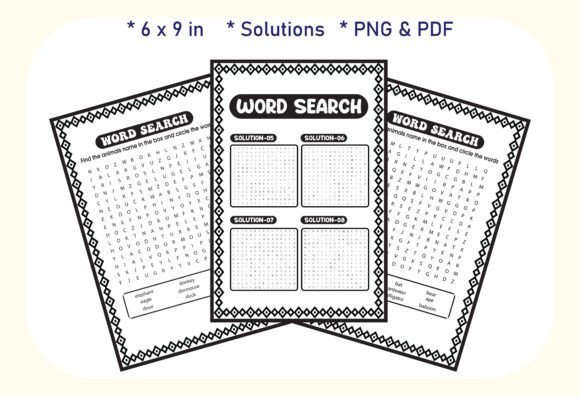
For those creating activity books, educational materials, or looking for an instant printable collection, a product like 20 Easy Word Search Puzzles for Kids KDP Interior embodies the design principles above. The package includes a single PDF file that is formatted and tested for KDP ready to upload. This means educators, self-publishers, and parents can use it immediately without adjusting margins, fonts, or page layouts. The total page count reaches 25 pages, comprising 20 puzzles each presented alone on its page, plus front matter and solution pages, all designed to streamline the final output. The interior is built with large print, 1 puzzle per page, and it arrives entirely watermark-free, so every printed copy looks crisp and clean.
Because it is formatted and tested for KDP, the file meets Amazon’s printing specifications, reducing the technical hurdles that often frustrate first-time low-content book creators. Whether you plan to add them to different activity books or print and solve directly for personal use, the versatility is immediate. A teacher might print a few pages for the classroom, a parent might bind them into a summer road-trip booklet, and a KDP publisher might include them as a section in a larger kids’ activity book. The absence of watermarks ensures the puzzles look authentic and professional in every use case.
Why the Format Matters for Children and Creators
Let us unpack why the specific format of such a resource matters deeply. The 1 puzzle per page layout is not just a technical detail; it shapes the child’s interaction. When only one puzzle occupies a page, there is no accidental peeking at the next set of words, no confusion about which word list belongs to which grid. For children with attention difficulties or visual processing challenges, this simplicity can be the difference between engagement and abandonment. The large print further lowers the barrier, ensuring that a five-year-old or a child with emerging fine motor skills can circle letters with a chunky pencil comfortably.
From a creator’s standpoint, receiving a PDF file ready to upload removes guesswork. The interior has been tested on the KDP platform, which means the trim size, bleed, and margins align with printing requirements. The file structure—20 puzzle pages plus a few supplementary pages—makes the total 25 pages a manageable yet satisfying length. It is short enough to keep a young solver interested over several sessions, yet long enough to feel like a substantial collection. For someone assembling a mixed activity book, these 20 puzzles can serve as a standalone chapter or be spread throughout the book as brain breaks between coloring pages or mazes.
Building Vocabulary Through Themed Word Lists
High-quality easy word search puzzles often cluster vocabulary thematically. Imagine a puzzle that centers on playground words: slide, swing, run, jump, climb. A child not only practices spelling these words but also reinforces the semantic connections between them. This type of grouping aids memory and provides a subtle lesson in categorization—a foundational thinking skill. The 20 Easy Word Search Puzzles for Kids can be used to introduce new themes each day: Monday might feature colors, Tuesday fruits, Wednesday numbers, and so on. The repetition across puzzles reinforces the words in different contexts.
Language development researchers note that children learn vocabulary best when words appear in meaningful, motivating settings. A puzzle offers a miniature game-like environment where finding a word triggers a small dopamine reward. That positive feeling attaches to the word itself, making it more likely to be remembered. When the word list is intentionally simple, the child encounters success frequently, reinforcing a can-do attitude toward language tasks.
Blending Digital and Tangible: A Balanced Approach
We live in a screen-saturated era. Many word search apps exist, and they have their place. Yet a printed puzzle retains distinct advantages. It gives the child a tactile experience—the scratch of pencil on paper, the physical circling, the ability to scan the whole page at a glance without zooming. There is also no risk of accidental clicks on ads or links. A stack of printed puzzles from a clean PDF provides a focused, uninterrupted session. For many families, this is a deliberate choice to incorporate more analog activities into the day. Having a file that can be printed again and again means that if a page gets ripped or a mistake is made, a fresh copy is always available.
Interestingly, the same PDF that serves a family can also be uploaded to a tablet with a stylus for a hybrid experience. Some children enjoy using a drawing app to mark words directly on the PDF, combining digital convenience with puzzle-solving. The versatility of a single, watermark-free file accommodates both preferences.
Selecting and Customizing Puzzles for Different Ages
While the phrase “easy” suggests a universal fit, small variations in word length, grid size, and letter density can tune a puzzle to a specific age band. For preschoolers, a 6x6 grid with only three-letter words placed horizontally works best. Kindergarteners may handle an 8x8 grid with horizontal and vertical words. By first grade, a 10x10 grid with a few diagonals becomes appropriate. A set of 20 puzzles might include a gentle progression, starting simpler and gradually increasing challenge. This design helps maintain confidence while stretching skills incrementally—exactly the kind of scaffolded learning that early childhood educators recommend.
When using 20 Easy Word Search Puzzles for Kids KDP Interior 100 formatted and tested for KDP ready to upload, you can preview the PDF to check the difficulty arc. If the set appears consistent, you might pair it with themed stickers or reward stamps for extra motivation. Some parents laminate a few pages and let children use dry-erase markers, making the puzzles reusable. The durable, large-print format photocopies well too, so a single PDF purchase can serve an entire classroom or a whole season of at-home learning.
Beyond Entertainment: Social and Emotional Benefits
Word searches can shift from solo endeavors to social activities with a minor adjustment. Siblings can race to find the same word, or a parent and child can alternate turns circling words, turning the puzzle into a cooperative game. This low-stakes interaction builds communication, patience, and turn-taking. Because easy puzzles rarely generate intense frustration, the experience remains positive, strengthening the child’s relationship with the adult. In a world where many activities are either passive (watching) or highly competitive (video games), the word search occupies a calm middle ground.
Additionally, completing a puzzle page provides a natural sense of closure. There is a clear endpoint, a moment of “done,” which can be soothing for children who thrive on structure. Ticking off each found word from the list offers a small but satisfying form of accomplishment that builds executive function skills like task completion and attention to detail.
Integrating Word Searches into Business and Education Products
For entrepreneurs building low-content books on platforms like Amazon KDP, easy word searches represent a perennially in-demand niche. The audience—parents, grandparents, teachers—purchases activity books regularly. The key is delivering a clean, frustration-free product. A ready-made interior such as 20 Easy Word Search Puzzles for Kids KDP Interior removes the design and formatting labor, allowing the creator to focus on cover design, marketing, and bundling. Since the interior is already tested, the risk of customer complaints about misaligned pages or formatting errors drops significantly. The 20-page puzzle core, plus a few extra pages, yields a total of 25 pages—a sweet spot for a thin, budget-friendly print product that still offers enough value to justify the price.
Moreover, these puzzles can be mixed with other activity types: coloring pages, dot-to-dots, mazes, or handwriting practice. A business owner might take the PDF and combine it with similar resources to create a hefty “Vacation Activity Book” or “Kindergarten Readiness Workbook.” The commercial license flexibility of a no-watermark, upload-ready file is exactly what a growing KDP business needs to expand catalog offerings without adding design overhead.
Making the Most of One Puzzle Per Page
A design choice that seems simple—one puzzle per page—deserves deeper appreciation. In addition to reducing clutter, this layout allows space for creative enhancements. A child can draw a picture related to the theme in the margin. A teacher can write a quick note of encouragement. The ample white space also reduces eye fatigue, which is critical for young children whose visual systems are still maturing. When the puzzle is printed large, that open space frames the activity, signaling to the child: this is your space, take your time. Such subtle environmental cues can improve persistence.
For children who find handwriting or circling challenging, the extra room means they can use a highlighter, a bingo dauber, or even a small stamp to mark words, turning the puzzle into a multi-sensory experience. The one-puzzle-per-page design invites adaptation without boxing in the user.
Final Thoughts on Choosing and Using Word Search Resources
The enduring charm of easy word searches lies in their simplicity, but that simplicity is engineered. Every decision—word selection, font size, page layout, puzzle count—affects whether a child will stick with the activity or toss it aside. A resource like the 20 Easy Word Search Puzzles for Kids KDP Interior, 20 pages of puzzles totaling 25 pages, large print, 1 puzzle per page, delivered as a single PDF file ready to upload, with no watermarks, demonstrates that when the details are handled thoughtfully, the result is a product that serves children, parents, teachers, and creators equally well. It works as a stand-alone printable set, a chapter in a bigger book, or a reusable classroom station. In all these scenarios, the goal remains the same: a moment of quiet focus, a dash of joy, and a step forward in literacy. And that is a word worth finding.