Managing Attention with Intention: A Practical Guide to the 2024 ADHD Daily Planner
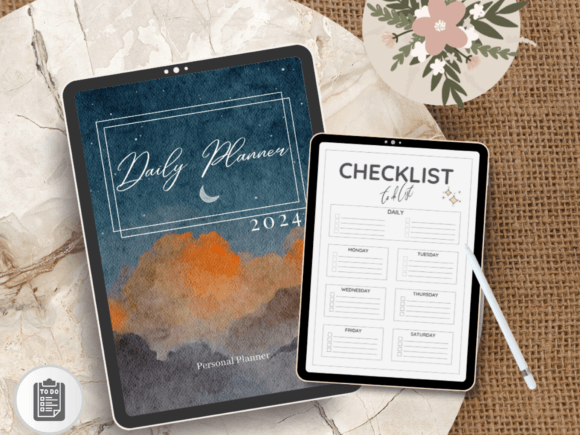
For anyone navigating the demands of modern work and personal life while managing ADHD, the gap between intention and action can feel especially wide. Standard planners often fall short because they assume a neurotypical relationship with time, memory, and follow‑through. The 2024 ADHD Daily Planner is a purpose‑built resource designed to bridge that gap. It’s not just a calendar; it’s a structured yet flexible system that helps externalize working memory, reduce overwhelm, and turn scattered ideas into completed tasks. Whether you’re a freelancer juggling client deadlines, a small business owner overseeing multiple projects, or a creative professional trying to protect deep‑work hours, this planner provides the scaffolding to make daily life feel less chaotic and more doable.
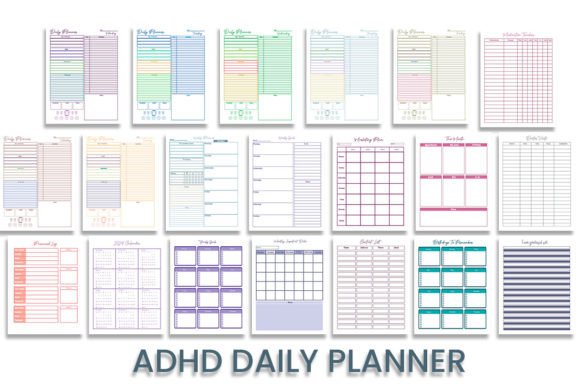
What makes this particular tool stand out is its download format. You receive AI, PDF, SVG, and high‑resolution JPEG files — all in CMYK color at 300 DPI across 20 printable pages. This means you’re not locked into a single bound book. You can print fresh pages as needed, customize layouts in your favorite vector software, or use the same file set to create a ring‑bound notebook, a discbound system, or a simple clipboard stack. That kind of adaptability matters when you’re working to build a routine that actually sticks.
Why the 2024 ADHD Daily Planner Fits Into a Broader Support System
Planners are rarely a standalone solution. They work best when integrated with other tools and habits. Think of the 2024 ADHD Daily Planner as a physical or digital anchor — something that holds your daily priorities, reminds you of important dates, and gives you a place to offload details your brain would otherwise burn energy trying to remember. It complements digital calendars, task management apps, and note‑taking systems rather than competing with them.
For example, you might keep all appointment scheduling and shared team deadlines in Google Calendar, then each evening use the planner’s daily spread to translate those digital obligations into a realistic paper‑based plan. The yearly calendar helps you spot patterns at a glance — ideal for blocking out travel, seasonal projects, or recovery periods after intensive work sprints. The monthly important dates page works as a one‑stop reference so you don’t miss a client renewal, tax deadline, or a child’s school event. None of this requires you to abandon apps you already trust; instead, the planner captures what’s most actionable right now and filters out the noise.
What’s Inside: Core Components and How They Function Together
The 20‑page structure isn’t random. Each component addresses a specific challenge that often trips up ADHD brains. Let’s walk through them as they might be used in a real workflow:
- Yearly Goals and Yearly Calendar: These sit at the front, giving you a clear destination and a map of the year ahead. Instead of vague aspirations, the goals section encourages you to break big objectives into quarterly checkpoints. The yearly calendar lets you mark non‑negotiables — vacations, conferences, project launches — so you can see where bandwidth actually exists.
- Weekly Planner and Weekly Goals: The weekly view is where the big‑picture connects to daily action. By selecting 2–3 weekly goals that align with your yearly aims, you create a bridge that keeps you on track. The layout makes it easy to see how a single week fits into the larger arc, reducing the tendency to overcommit or drift.
- Daily Planner: This is the workhorse. A well‑designed ADHD daily page doesn’t just record tasks; it supports prioritization. You might list everything on your mind, then star the top three must‑dos. Time blocking, built‑in sections for notes, and a small wins tracker all help turn a long to‑do list into a sequence of manageable actions.
- Monthly Important Dates: One dedicated place for dates that might otherwise hide in email reminders or social media notifications. Birthdays, bill due dates, subscription renewals — capturing them here reduces mental clutter and prevents last‑minute scrambling.
- Birthdays to Remember: Separate from generic monthly dates, this page acknowledges that maintaining relationships requires external memory cues for many people with ADHD. A quick glance each month keeps you connected without relying on patchy recall.
- Contact List and Password Log: These are pragmatic additions. Having essential phone numbers, support contacts, and login hints in one secure, offline location removes friction during high‑stress moments. Since the planner is a printable PDF, you can keep this page locked away or carry it discreetly, unlike sticky notes stuck to a monitor.
Making the Planner Work Before, During, and After a Project
The real value of the 2024 ADHD Daily Planner emerges when it’s woven into your entire project lifecycle, not just the busy workdays. Before you launch into a new initiative—say, a client website redesign or a personal decluttering effort—you can use the yearly goals page to define what success looks like and the weekly planner to sketch out the first phase. This pre‑planning step gives you a chance to identify potential bottlenecks, gather resources, and set realistic timelines.
During the project, the daily planner becomes a place to log progress, adjust priorities, and capture distracting thoughts. If a sudden idea pops up, you jot it in the notes margin rather than abandoning the task at hand. After the project wraps, the planner doubles as a lightweight retrospective tool. Flipping back through completed daily pages shows what strategies worked, where you consistently lost afternoon focus, and how you might structure your next similar effort. This kind of reflection often gets skipped in fast‑paced environments, yet it’s critical for continuous improvement.
Practical Integration with Physical and Digital Workflows
One of the most common questions is how to integrate a paper planner with digital systems without duplicating effort. The 2024 ADHD Daily Planner’s file variety gives you options. If you prefer writing by hand, print the pages on heavyweight paper and use a clipboard or discbound punch. The 300 DPI CMYK files ensure crisp output on any home or office printer, and you can print in batches — six weeks at a time, for instance — so you’re not overwhelmed by a full year’s worth of blank pages staring back at you.
If you use a tablet with a stylus, the same PDF can be imported into note‑taking apps like GoodNotes, Notability, or a PDF annotator. This digital‑hybrid method preserves the tactile satisfaction of handwriting while giving you searchability and cloud backups. The included AI and SVG files are especially useful if you have specific layout preferences. Open them in Illustrator, Inkscape, or Affinity Designer to tweak line spacing, add your logo, or create a minimalist version that suits your sensory preferences. This level of customization means the planner evolves with your needs rather than becoming another abandoned tool.
Consistency, Organization, and Quality Control Over Time
Sticking with any planning system requires more than motivation. The structure of the 2024 ADHD Daily Planner supports consistency by reducing decision fatigue. Because the pages are pre‑designed with intuitive sections, you don’t spend time each morning drawing boxes or reinventing a layout. You simply show up and fill in the blanks. This small friction reduction can be the difference between a planner that sits on a shelf and one that gets used daily.
From a quality standpoint, the files deliver print‑ready reliability. The CMYK color profile avoids the surprise color shifts that occur when printing RGB files. You’ll get consistent, vibrant pages whether you print at home or send them to a professional service. And because you own the files, you can reprint a specific page if ink smudges or life gets messy — no need to buy an entirely new planner.
Long‑term use also benefits from the built‑in review layers. At the end of each week, a quick glance at completed daily sheets and unchecked tasks provides honest data. Did you consistently underestimate how long deep work takes? Did certain types of tasks repeatedly get postponed? This isn’t about self‑criticism; it’s about adjusting your expectations and workflow to match reality. Over months, these small course corrections compound into significantly better time management and lower stress.
Adaptation Across Roles: Creator, Entrepreneur, Educator, and Beyond
A teacher might use the password log to store educational platform credentials and the monthly important dates to track grading periods and IEP meetings. A small business owner could combine the contact list with a quick‑reference vendor directory, while using weekly goals to align team tasks with quarterly revenue targets. For a content creator, the yearly calendar becomes a content calendar backbone, and the daily planner helps batch podcast episodes or social media posts without burnout. In each case, the planner acts as a central hub that collects scattered threads and presents them in a manageable, visual format — exactly what an ADHD brain often needs to function smoothly.
The fact that you can print multiple copies of a single page type also allows for role‑specific customization. You might keep a dedicated binder for recurring client projects, each with just the daily and weekly pages needed, leaving the yearly pages in your main planner. Or you could use the SVG files to create a wall‑mounted dry‑erase version of the monthly calendar for family visibility. These possibilities extend far beyond a typical bound planner.
Preventing Overwhelm and Supporting Executive Function
Executive function challenges often show up as difficulty starting tasks, holding information temporarily, or switching between tasks. The planner’s layout subtly addresses all three. By providing a designated space for tomorrow’s priorities before you end today, it reduces the morning “what now?” paralysis. The notes and password sections act as an external RAM, holding information you don’t need constantly but can’t afford to lose. And because the weekly view is always nearby, you can see how a new request fits into your existing commitments before agreeing — a vital skill for protecting your time and energy.
It’s also worth noting the sensory benefits. Many adults with ADHD find that a clean, uncluttered layout reduces visual overstimulation. The downloadable files let you experiment with paper weight, color, and even tint — perhaps a warm off‑white background that’s gentler on the eyes than bright white. These small adjustments can make planning feel less like a chore and more like a supportive ritual.
Getting Started Without Overcomplicating Things
Begin by printing or loading a single week: yearly calendar, the current week’s spread, and one daily page for today. Don’t try to set up an entire year’s worth of pages at once. Fill in just the fixed events from your digital calendar and note two weekly goals that feel genuinely important, not aspirational. Use the daily page throughout the day as a working document — scribble, cross out, and move tasks to the next day if needed. At the end of the week, take five minutes to transfer any lingering priorities and add the next week’s pages into your system.
Resist the urge to aim for perfection. The planner is designed to absorb the messy reality of daily life, not to be a pristine record of productivity. If a page got covered in doodles during a long meeting, that’s fine. You can print fresh pages whenever you want. Over time, you’ll find your own rhythm and maybe even adapt certain page formats using the editable AI or SVG files to better fit your style.
Long‑Term Use and Evolution of Your Planning Practice
As 2024 progresses, your needs will shift. The planner’s modular download structure supports that evolution without forcing you to buy a new system. You might start the year with a heavy focus on building daily habits, using the daily planner religiously. By mid‑year, you may shift toward bigger strategic thinking and rely more heavily on the yearly and monthly views. The password log remains useful regardless of season, and the contact list only becomes more valuable as your network grows.
Because you own the original files, you can even re‑enter 2025 using the same core design, adjusting dates and goals accordingly. The learning curve disappears, and you’re left with a thoroughly internalized workflow that still feels fresh each time you print a new batch. That continuity is a significant advantage for ADHD brains that struggle with transitions between systems.
The 2024 ADHD Daily Planner ultimately succeeds by respecting how an ADHD mind works rather than fighting against it. It provides structure without rigidity, repeatable formats that reduce daily setup time, and enough flexibility to handle the unexpected shifts of a dynamic life. Whether you’re a publisher mapping editorial calendars, a freelancer balancing invoices and creativity, or a hobbyist trying to turn a passion into a sustainable practice, this planning toolkit brings clarity to the everyday — one thoughtfully designed page at a time.