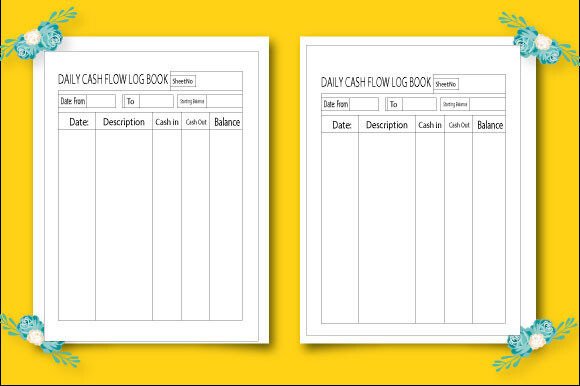
Daily Cash Flow Log Book for Amazon KDP
Managing money doesn’t have to feel like guesswork. Whether you run a small side hustle, freelance full-time, or oversee a growing business, a reliable system for tracking daily cash movement can completely shift how you understand your finances. The Daily Cash Flow Log Book Amazon KDP interior offers a practical, print-ready tool that helps individuals and professionals take charge of their numbers without wrestling with complex software or messy spreadsheets. It’s a straightforward logging framework built for real-world use — and it’s available right now as a downloadable interior, ready to upload and publish through Amazon’s platform.
What sets a physical log book apart is the deliberate pause it creates. Filling out a page by hand forces you to confront every dollar in and out, leading to fewer overlooked expenses and a stronger grasp on spending patterns. This particular interior was developed with that mindset in mind, balancing clean layout with functional detail so that each entry feels quick but meaningful.
What Defines a Reliable Cash Flow Log Interior
A quality log book interior does more than just print lines on a page. It guides the user through a consistent routine. The Daily Cash Flow Log Book Amazon KDP comes in an 8.5×11 inch trim size, giving enough room for detailed notes without becoming bulky. Inside, you’ll find different interiors pages — some structured for minimal daily recording, others with additional columns for breakdowns by category, payment method, or pending transactions. This variety means a single journal can evolve with the user’s needs rather than locking them into one rigid format.
The specifications are built with professional printing standards in mind. All pages are high-resolution interiors at 300 PPI, which ensures that even the finest lines and smallest type remain crisp after uploading to KDP. The color space uses CMYK, so what you see on screen closely matches the physical print output. The interior has been KDP tested, meaning it has already passed the common formatting and margin checks that cause delays for first-time publishers. That alone saves hours of troubleshooting.
Everyday Applications Across Different Lifestyles
Cash flow tracking isn’t just for accountants. The way people earn and spend has become fragmented — gig payments, subscription revenue, material costs, platform fees — and a single dashboard rarely captures everything. Here are a few settings where this log book interior proves immediately useful:
- Freelancers and independent contractors: Log income from multiple clients alongside recurring software subscriptions, co-working space fees, or equipment purchases. It becomes a running tally for quarterly tax estimates.
- Small retail or online shop owners: Record daily sales, cash on hand, and small expenses like packaging or marketplace commissions. Over a month, the log reveals profit trends that might otherwise hide in a bank statement.
- Household budgeters: Track variable spending like groceries, fuel, and entertainment. Families often discover that writing down every coffee or impulse buy curbs overspending far better than a notification from a budgeting app.
- Creative professionals and educators: Dancers, tutors, designers, and consultants can note session income, material costs, and mileage in one place. This supports invoice reconciliation and spotlights underperforming services.
- Business owners testing new products: Use a dedicated log to isolate costs and revenue for a launch period. Having a separate, manual record often highlights hidden expenses that integrated software averages out.
In each case, the Daily Cash Flow Log Book Amazon KDP interior shifts the focus from passive observation to active engagement with money. That small behavioral change often leads to sharper decision-making.
Design Qualities That Support Clarity and Consistency
A log book interior needs to stay out of its own way. The layout here uses clear section breaks, subtle headers, and enough white space that handwriting doesn’t feel cramped. The different interiors pages are not random — they’re purpose-built for varying levels of detail. Some people need only a date, description, income, and expense column. Others want room for running balance, transaction type, and notes. This interior delivers both, so sellers can market it as a versatile cash journal rather than a single-use template.
The high-resolution 300 PPI specification matters more than it sounds. Many KDP interiors are built at lower resolutions and then upscaled, leading to softening around text or thin borders. Here, the 300 PPI source files keep everything sharp, even on headings and decimal points. And because the file uses CMYK color, the final printed interior won’t suffer from unexpected color shifts that sometimes happen when RGB artwork is converted during the publishing process.
Beyond the technical specs, the 8.5×11 trim size provides a comfortable writing surface without feeling like a textbook. It fits on most desks, and the larger area reduces the need to abbreviate entries, which often leads to confusion later. The interior was also KDP tested, meaning margins, bleed, and alignment are already validated against Amazon’s printing specifications. This reduces the publisher’s effort to a simple upload and brief preview check.
Instant Access to EPS and PDF Formats
Time is one asset nobody gets back. Waiting for custom design work or manually fixing margins across dozens of pages can derail a publishing plan. This product delivers immediate downloads in both EPS and PDF formats. PDF is ready for direct upload to KDP. EPS provides an editable vector file for those who want to tweak fonts, add branding, or adjust certain elements without starting from scratch. Having both means a publisher can publish as-is in minutes or customize thoroughly over a weekend.
That flexibility matters for sellers who manage multiple niches. One day a customer might want a minimalist cash flow log. Next month, they might ask for a version with a colored accent or a dedicated section for mileage. The EPS file makes those adjustments straightforward, saving the cost of a separate designer. Meanwhile, the tested PDF serves as a reliable fallback for anyone who wants a no-fuss publishing experience.
Observations on Implementing a Daily Logging Routine
A tool is only as strong as the habit it builds. When introducing a physical log book, whether to yourself, a team, or your customers, consistency beats perfection. Encourage small starts: jot down the top three cash movements each evening, even if it’s just a coffee purchase, a client payment, and a subscription bill. The Daily Cash Flow Log Book Amazon KDP interior works well here because the page doesn’t demand exhaustive detail — it simply prompts the essentials.
Some users find it helpful to pair the log with a weekly review. Sunday evenings, for example, become a quick check: compare running balances, note any unrecorded transactions, and circle entries that need follow-up, like outstanding invoices. The different interiors pages support this layered approach by offering a condensed daily view alongside a more detailed weekly or monthly summary format.
From a seller’s perspective, offering a log book interior that encourages this kind of practical routine can boost reviews and repeat purchases. Customers often buy one journal, use it faithfully, and then return for another when it runs out — or recommend it to business partners. The clean, tested design reduces complaints about printing errors or formatting issues, protecting the seller’s account health.
Profiling the Ideal User and Use Cases
Picture a wedding photographer who works 20 events a year. They have deposit payments, final balances, printing costs, assistant fees, and travel expenses scattered across months. A dedicated cash flow log lets them map each project’s financial life cycle and quickly spot which events are most profitable. Or consider a mobile detailer who operates purely with cash and mobile payments. At the end of a long day, the log becomes a straightforward way to tally jobs and deduct supply costs.
Even in education and coaching environments, a physical log can serve as a teaching tool. Business coaches sometimes recommend clients keep a 30-day money journal to build awareness before jumping into software automation. The 8.5×11 size and varied interiors make the journal feel like a workbook rather than a ledger, lowering resistance for first-time trackers.
For commercial publishers, the value extends beyond the immediate sale. A well-built cash flow log elevates a KDP brand’s reputation. When the interior arrives print-ready with no blur, no margin errors, and a thoughtful layout, it signals to customers that the publisher cares about quality. That impression carries into every other product in the storefront.
Points to Consider Before Selecting an Interior
Not all log book interiors are interchangeable. When evaluating options on Amazon KDP, looking at these factors can save time and frustration:
- Print compatibility: Insist on CMYK, 300 PPI, and KDP-tested interiors. Many cheaper alternatives skip these steps, leaving the publisher to resolve formatting rejections alone.
- Page variety: An interior with multiple page styles usually offers better long-term value for end users. A single repeated layout can feel monotonous and may not fit different logging needs.
- File formats: Having both PDF and editable EPS files empowers you to customize. Without EPS, any change — even a small text adjustment — might require rebuilding pages from scratch.
- Trim size: 8.5×11 inches works well for most, but ensure it matches your cover design. The large format provides ample writing space without intimidating users.
- Actual usability: Look at the way columns are spaced and labeled. Narrow expense columns frustrate users, while excessive decorative elements waste ink and distract from the core purpose.
The Daily Cash Flow Log Book Amazon KDP meets these practical checks. It prioritizes function while maintaining a professional appearance, making it suitable for a broad audience ranging from individual budgeters to small business owners.
Supporting Long-Term Productivity and Financial Visibility
Adopting a manual cash flow log might seem old-fashioned at first glance. Yet there’s a reason paper planners and journals continue to thrive alongside sophisticated apps. Writing by hand engages memory differently, reducing the likelihood of ignoring small, recurring expenses that digital summaries smooth over. For someone juggling irregular income streams, the daily ritual of opening a log book acts as a grounding point — a few minutes of clarity in the middle of financial noise.
Many professionals report that after a few weeks of consistent logging, they start catching patterns: a subscription they forgot about, a service that consistently underpays for the time invested, or seasonal ups and downs they can prepare for in advance. The Daily Cash Flow Log Book Amazon KDP interior facilitates those insights not through complexity, but through a clean, repeatable structure that supports daily commitment without exhaustion.
For KDP sellers, offering this kind of tool means putting a genuinely helpful product into the hands of people who need it. The instant download format removes the delay between idea and published book, while the tested, high-resolution interior safeguards the end user’s experience. It’s a thoughtful intersection of design, practicality, and market demand — and the type of resource that keeps customers coming back to your Amazon profile for more.