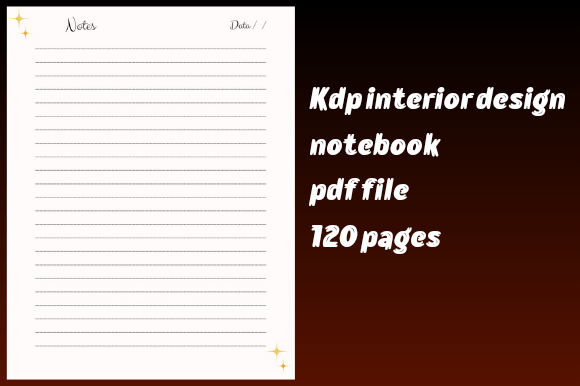
Unlocking Creativity with the KDP Interior Design Notebook: A Versatile Tool for Designers and Creators
Every designer knows that moment when inspiration strikes unexpectedly. A texture glimpsed in a café, a color palette observed during an evening walk, or a furniture arrangement that catches the eye. Capturing these fleeting ideas requires more than just memory. The KDP Interior Design Notebook steps into this space as a thoughtfully crafted companion for anyone engaged in the visual and spatial arts. Whether you are a seasoned interior design professional, a student building a portfolio, or a creative entrepreneur preparing content for Kindle Direct Publishing, this printable notebook offers a structured yet flexible canvas for your thoughts.
At its core, this product delivers a substantial 120-page PDF file formatted at 11×8.5 inches, a size that mirrors the generous proportions of a standard landscape-oriented sheet. The unique design sets it apart from generic notebooks, providing a visual identity that resonates with the aesthetics of interior design work. What makes this particularly appealing for KDP users is the plug-and-play nature of the file. If you are working on KDP, you can use it without editing, saving hours of formatting and layout work. Alternatively, you can use it as a personal notebook, printing pages as needed for your daily creative practice.
What Exactly Is a KDP Interior Design Notebook?
Understanding the dual nature of this product clarifies its appeal. A KDP Interior Design Notebook is a pre-formatted digital file designed specifically for use with Amazon's Kindle Direct Publishing platform. It bridges the gap between professional design documentation and the growing market of printable creative resources. The notebook arrives as a ready-to-upload PDF, which means you can publish it as your own interior design journal, planner, or sketchbook on KDP without wrestling with page dimensions, margins, or bleed settings.
However, the product description makes a crucial point: you are not limited to publishing. Many buyers purchase these notebooks purely for personal use. The 11×8.5 inch dimensions provide ample space for sketching floor plans, annotating fabric swatches, or documenting client consultations. The 120-page count strikes a balance between comprehensiveness and manageability, offering enough room for substantial projects without becoming unwieldy.
The Anatomy of the Design: What Makes This Notebook Different
Generic notebooks often fail the interior designer because they lack structural elements that support visual thinking. The unique design promised by this product implies intentionality. While the specific interior layout may vary, notebooks in this category typically include elements such as project title pages, material inventory sheets, scaled grid sections, and mood board templates. The repetition of geometric symbols in the product description — the alternating squares and lines — hints at a clean, modern aesthetic that avoids distracting ornamentation.
Key characteristics that define this notebook include:
- Size specificity: The 11×8.5 inch format works exceptionally well for interior design because it accommodates wide-angle room sketches and elongated furniture layouts. This landscape orientation mirrors how designers naturally view spaces.
- Print-ready PDF format: Receiving a single PDF file means you can print pages selectively. Need five copies of a client questionnaire page? Print those. Want to test different paper stocks? The digital format gives you complete control.
- 120-page depth: This length provides enough content for multiple projects. A typical interior design project might consume 10 to 15 pages of notes, sketches, and reference collages. With 120 pages, you can document eight to twelve complete projects or use the notebook as a semester-long academic companion.
- KDP compatibility: The file adheres to KDP's technical requirements, meaning trim size, margins, and safe zones are already configured. This eliminates the learning curve associated with preparing print-ready files.
Who Benefits Most from This Notebook?
The audience for a KDP Interior Design Notebook extends beyond the obvious demographic of professional interior designers. The versatility of the product creates value for several distinct groups, each with unique needs and workflows.
Interior Design Students and Educators
Design education demands extensive documentation. Students compile precedent studies, material analyses, and iterative sketches throughout their coursework. The 120-page capacity of this notebook accommodates an entire semester's output. Educators might find the printable format useful for creating customized assignment booklets, ensuring every student works within a consistent framework.
KDP Entrepreneurs and Content Creators
For those building a publishing business on Amazon, the ability to use this notebook without editing represents significant time savings. The interior design niche on KDP remains competitive, and standing out requires polished, professional-looking products. By starting with a pre-designed notebook, creators can focus on marketing and niche selection rather than graphic design. The uniqueness of the design becomes a selling point for end customers who browse through hundreds of similar-looking journals.
Homeowners and DIY Enthusiasts
Renovating a home involves countless decisions about paint colors, fixture placements, and material selections. A dedicated Interior Design Notebook keeps these details organized in one place. When meeting with contractors or visiting showrooms, having a physical notebook with relevant notes prevents costly miscommunications. The printable nature means you can print fresh sheets for each room or project phase.
Professional Designers Managing Multiple Clients
Juggling several projects simultaneously requires impeccable organization. The notebook's structure supports client-specific sections, allowing designers to maintain clear boundaries between projects. Printing multiple copies of critical pages — like client approval forms or measurement checklists — ensures nothing gets overlooked during site visits.
Practical Applications: Real-World Scenarios
Consider a freelance interior designer preparing for an initial consultation with a new client. She prints 15 pages from her KDP Interior Design Notebook, including a project overview sheet, a client preference questionnaire, and several gridded pages for quick spatial sketches. During the meeting, she uses the notebook to capture the client's stated preferences while also noting unspoken observations — the client lingers near south-facing windows, gravitates toward textured fabrics, and mentions a fondness for mid-century furniture. These nuanced details find a home in the notebook, later informing a design proposal that feels remarkably personalized.
Another scenario involves a KDP publisher specializing in creative journals. She has identified a sub-niche: interior design students who want aesthetically pleasing study companions. Instead of designing a notebook from scratch, she acquires this ready-made file, customizes the cover with her brand elements, and publishes it within days rather than weeks. The unique design of the interior pages becomes her competitive advantage, as customers recognize the thoughtful layout compared to generic alternatives.
A third example features a couple remodeling their first home. They print the entire 120-page notebook, using different sections for each room. The kitchen section holds appliance measurements and cabinet finish samples. The living room pages capture paint swatches and sofa dimensions. When their contractor asks about the master bathroom vanity height, they flip to the relevant page and provide an immediate answer. This level of organization transforms a potentially stressful process into a manageable, even enjoyable experience.
Strengths, Considerations, and Practical Expectations
Every product involves trade-offs, and understanding them helps potential buyers make informed decisions. The KDP Interior Design Notebook offers clear advantages while also presenting certain limitations worth acknowledging.
Notable Strengths
- Immediate usability: The file requires no editing for KDP publishing. This accessibility lowers the barrier for newcomers to the print-on-demand space.
- Flexible deployment: Whether used digitally, printed in full, or printed selectively, the PDF format adapts to individual preferences.
- Professionally proportioned dimensions: The 11×8.5 inch landscape format provides generous space for the wide-angle thinking that interior design demands.
- Substantial page count: At 120 pages, the notebook supports extended use without feeling overwhelming.
- Design distinctiveness: The emphasis on uniqueness suggests a product that avoids the cookie-cutter templates flooding the market.
Considerations Before Purchase or Use
Potential buyers should evaluate whether the notebook's internal structure aligns with their specific workflow. Some designers prefer heavily gridded pages, while others want blank spaces for freeform sketching. Without previewing the interior layout, purchasing involves a degree of trust in the creator's design sensibility. Additionally, while the PDF format offers flexibility, users without access to a quality printer may find the output disappointing. Paper quality, ink saturation, and binding choices all affect the final physical product.
For KDP publishers, understanding the competitive landscape matters. Even with a unique design, success on Amazon depends on keyword optimization, cover design, and niche selection. The notebook provides the interior content, but the publisher must still invest effort in positioning the product effectively.
Evaluating Suitability for Your Projects
Determining whether this notebook fits your needs requires honest assessment of your creative and professional workflow. Ask yourself several questions before committing:
- Do you primarily work with landscape-oriented sketches and wide-format layouts? If your design process leans toward portrait-oriented documentation, the 11×8.5 inch format might require adjustment.
- Are you publishing on KDP, or using the notebook personally? The answer influences how you value the no-editing-required feature versus the unique design elements.
- How important is page structure variety? Some notebooks include 10 or more distinct page templates; others maintain consistent layouts throughout. Consider whether you need variety or prefer predictability.
- Does the 120-page count match your project scope? For a single-room redesign, 120 pages may exceed what you need, while a whole-house renovation might demand multiple notebooks.
Maximizing the Value of Your Notebook
Whether you purchased this as a personal tool or plan to publish it on KDP, certain practices enhance what you extract from the KDP Interior Design Notebook. For personal users, consider printing on heavier paper stock — at least 24-pound weight — to prevent bleed-through when sketching with markers or fountain pens. Organizing pages in a three-ring binder allows you to rearrange sections as projects evolve. Adding tab dividers between different projects or rooms creates a navigation system that speeds up information retrieval.
For KDP publishers, the opportunity extends beyond simply uploading the file. Consider bundling the notebook with complementary products, such as a client questionnaire booklet or a material sample tracker. Writing a compelling product description that emphasizes the notebook's specific benefits for interior designers — rather than generic journaling — appeals more directly to the target audience. The phrase unique design should translate into visible features that differentiate your listing from competitors.
The Intersection of Digital and Physical Creativity
There is something deeply satisfying about putting pen to paper, especially in a field as tactile as interior design. Fabric textures beg to be felt, paint chips demand to be compared under different lighting conditions, and spatial relationships become clearer when sketched by hand. The KDP Interior Design Notebook occupies an interesting position at this intersection. It exists first as a digital file, optimized for online distribution and print-on-demand platforms. Yet its ultimate purpose is physical — to become a tangible object filled with a designer's observations, measurements, and visions.
This duality mirrors the modern design profession itself, where digital tools like CAD software and virtual room planners coexist with hand-drawn sketches and physical material libraries. Embracing both modes of working, rather than choosing one over the other, often produces the most thoughtful and well-rounded design outcomes.
The product description closes with a simple sentiment: I hope you enjoy the product. That enjoyment ultimately derives from how the notebook integrates into your creative life. Whether you fill its pages with client notes, personal renovation plans, or publish it for others to fill with their own ideas, the value lies in the act of documenting, organizing, and refining the visual world around us.
In a marketplace saturated with generic templates and hastily assembled printables, a thoughtfully designed KDP Interior Design Notebook with a genuinely unique layout stands out. The combination of generous dimensions, substantial page count, and dual-purpose usability — personal or commercial — creates a versatile resource that adapts to varied needs. For interior designers seeking order amid creative chaos, for students building professional habits, and for publishers serving the design community, this notebook represents a practical investment in better organized and more beautifully documented work.