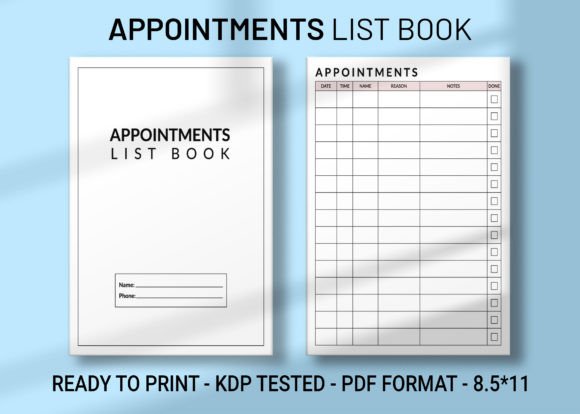
Mastering the Appointments List Book KDP Interior: Your Gateway to Professional Self-Publishing
Stepping into the world of self-publishing can feel overwhelming, especially when you are staring at a blank screen, unsure how to format your book for Amazon's Kindle Direct Publishing platform. Perhaps you have a great idea for an appointment tracker, a client booking log, or a daily schedule organizer, but the technical side of creating a print-ready interior stops you in your tracks. This is exactly where a high-quality Appointments List Book KDP Interior becomes your secret weapon. It transforms a complex design process into a simple, ready-to-upload solution, allowing you to focus on what truly matters—building your brand and serving your customers.
These digital files are not just blank pages. They are meticulously crafted templates designed with publishers in mind, tested on the KDP platform, and prepared with all the technical specifications that Amazon requires. Whether you are an experienced print-on-demand entrepreneur or someone launching their very first low-content book, understanding how these interiors work will save you hours of frustration and help you avoid costly formatting errors.
What Exactly Is a KDP Interior?
Before diving into the specifics of an appointments list book, let us clarify what a KDP interior actually means. In the self-publishing ecosystem, the "interior" refers to the entire inside content of your book—every page that sits between the front and back covers. For a novel, this would be the story text. For a low-content or no-content book like a journal, planner, logbook, or appointment tracker, the interior consists of repeatedly structured pages that serve a specific organizational purpose.
A KDP interior file is a print-ready document formatted to meet Amazon's exacting standards. This includes proper margins, trim size, bleed settings, and resolution. When someone purchases a template like the Appointments List Book Interior, they receive digital files that have already been designed, formatted, and tested. The hard work of layout, alignment, and technical compliance has been done for you. Your job becomes simply uploading the file, designing a cover, and publishing.
Why Low-Content Books Dominate the Print-on-Demand Market
The rise of low-content publishing has democratized the book creation process. Unlike traditional books that require extensive writing, editing, and proofreading, low-content books rely on functional, repeatable designs that users interact with through writing, checking boxes, or logging information. An appointments list book fits perfectly into this category. It appeals to professionals like salon owners, consultants, therapists, personal trainers, and medical receptionists who need a physical, well-organized record of scheduled meetings.
The beauty of this market lies in its scalability. Once you have a professional interior template, you can create multiple variations with different cover designs, targeting specific niches. A single Appointments List Book KDP Interior can become a "Hair Stylist Appointment Tracker," a "Massage Therapy Booking Log," or a "Veterinary Clinic Schedule Book" simply by changing the cover and book title. This flexibility makes the initial investment in a quality interior template incredibly valuable.
Unpacking the Appointments List Book KDP Interior Package
When you acquire a professionally designed interior template, understanding exactly what you receive helps you make the most of every file. The package typically contains several formats, each serving a distinct purpose in your publishing workflow. Let us walk through the key components you will find in a comprehensive Appointments List Book KDP Interior.
The Editable AI File: Your Creative Control Center
Adobe Illustrator files, designated by the AI extension, are the fully editable source documents. This is where you can make customizations, adjust colors, modify text, or tweak the layout to match a specific brand identity. For publishers who want to add a logo, change the font style, or incorporate unique design elements, the editable AI file provides complete creative freedom. Even if you do not have extensive design experience, opening this file in compatible software allows you to make small but meaningful adjustments before exporting your final print-ready version.
PDF Files: The Print-Ready Standard
High-resolution PDF files are the backbone of any KDP upload. Amazon's print-on-demand machinery relies on PDFs to reproduce your book accurately. The PDF files included in a quality template package are already configured with the correct color profile, typically CMYK, and razor-sharp resolution. This means your printed pages will look crisp and professional, with no blurry lines or pixelated text. Because these files are KDP tested, you can upload them with confidence, knowing they have already passed Amazon's automated review process in previous uploads.
PNG Files: Versatile High-Resolution Images
PNG files offer a different kind of flexibility. As individual page images with transparent backgrounds, they can be used in a variety of design software beyond Adobe products. If you prefer working in Canva, PowerPoint, or even Word, you can import these high-resolution PNGs and arrange them as needed. For publishers who collaborate with designers or use online design tools, PNG files serve as a universal bridge between the template source and your preferred creative environment.
Dimensions, Page Count, and Structure
The template described here comes in a classic 8.5 by 11 inches format, a widely recognized letter size that feels familiar and professional. With 120 total pages, including a dedicated intro page, the book achieves a substantial feel without becoming unwieldy. The intro page is a thoughtful addition—it provides space for a title, owner name, or brief instructions before the user dives into the main appointment logging sections.
What truly sets this interior apart is that it comes with bleed and is ready to upload directly to Amazon KDP. For anyone who has struggled with Amazon's technical requirements, these two features alone are worth their weight in gold.
Understanding Bleed and Why It Matters for KDP Success
If you are new to print design, the concept of bleed might seem mysterious. Simply put, bleed refers to the area of your design that extends beyond the final trim line of the page. When a book is printed, the pages are cut down to size by trimming equipment. If your design elements, such as background colors or decorative borders, stop exactly at the trim line, even a tiny misalignment during cutting will leave visible white slivers along the edges. Bleed prevents this by extending design elements an extra 0.125 inches or more beyond the trim boundary.
Amazon KDP explicitly requires interiors to account for bleed when the content runs to the edge of the page. A template that is "with bleed ready" means the designer has already extended all necessary elements, ensuring your printed book looks polished and professional, with no amateurish cutting errors. This is not a minor detail—books that fail Amazon's bleed checks will be rejected during the review process, delaying your launch and causing frustration.
How to Use Your Appointments List Book Interior Effectively
Receiving the digital files is just the beginning. To turn these files into a successful published product, you need a clear workflow. Start by opening the PDF or AI file and reviewing every page carefully. Confirm that the layout aligns with your vision. If you plan to leave the interior unchanged, you can proceed directly to creating an eye-catching cover. If you want to add a personal touch, make those edits in the AI or design software of your choice, then export a fresh PDF that meets KDP's specifications.
When uploading to Amazon KDP, select the correct trim size—in this case, 8.5 by 11 inches. Choose "bleed" under the bleed settings option, as your interior is designed with this feature. Upload your cover file separately, preview the entire book using Amazon's online previewer, and check for any formatting anomalies. Because the interior has already been KDP tested, you should encounter few, if any, technical issues during this process.
Customizing for Different Niches
One of the smartest strategies in low-content publishing is niche targeting. The same appointments list interior can power multiple products. Consider creating a version with a floral, pastel cover for a women-focused wellness planner. Another version could feature bold, clean typography for a corporate executive's scheduling book. Yet another could use playful, colorful graphics for a children's activity or tutoring appointment log. By segmenting your offerings, you increase the chances of connecting with specific buyer personas searching for exactly what they need.
Common Misconceptions About KDP Interiors
A persistent myth in the self-publishing community is that using pre-made templates somehow diminishes the quality or originality of your book. This could not be further from the truth. Professional templates provide a solid structural foundation, much like a builder uses a proven architectural plan. The uniqueness of your book comes from your cover design, your branding, your chosen niche, and the way you market the final product. Customers do not see the template—they see a useful, well-designed tool that solves a problem in their daily lives.
Another misunderstanding involves the fear that Amazon will reject books created from templates. Amazon KDP does not reject interiors based on their origin; they reject interiors that fail technical specifications. A KDP tested template has already proven its compliance. As long as you do not introduce formatting errors during customization, your book will pass review just like any other professionally prepared manuscript.
The Business Case for Ready-Made Interiors
Time is the scarcest resource for any entrepreneur. Designing a 120-page appointment book from scratch requires not only design skills but also hours of meticulous alignment, margin setting, and page numbering. Even experienced designers find this repetitive work draining. By investing in a ready-to-use Appointments List Book KDP Interior, you reclaim that time for higher-value activities like market research, cover design, advertising, and building your author brand.
Moreover, the cost of a template pales in comparison to the lost revenue from a delayed launch or a poorly formatted book that attracts negative reviews. Customers expect professional quality, even in low-content books. Pages that are misaligned, difficult to write on, or visually cluttered will result in returns and complaints. A polished interior protects your reputation and encourages positive word-of-mouth.
Frequently Overlooked Advantages
Beyond the obvious time savings, there are subtle benefits that experienced publishers appreciate. A well-designed interior considers the user's physical interaction with the book. Lines are spaced appropriately for handwriting. Checkboxes are sized to be easily ticked. The paper does not feel cramped because the designer has balanced white space with functional content. These ergonomic considerations separate a mediocre book from one that users reach for daily.
The inclusion of a dedicated intro page also adds a layer of professionalism that customers notice. It frames the book as a thoughtfully crafted product rather than a collection of identical forms. For gift-givers, this small detail makes the book feel more personal and giftable.
As the self-publishing landscape continues to evolve, the publishers who thrive are those who combine efficiency with quality. An Appointments List Book KDP Interior represents that exact intersection. It eliminates the technical barriers to entry while providing a canvas on which your creative and entrepreneurial vision can flourish. Whether you publish one book or build an entire catalog of functional stationery products, starting with a reliable, tested interior sets you on the path to consistent, positive results.